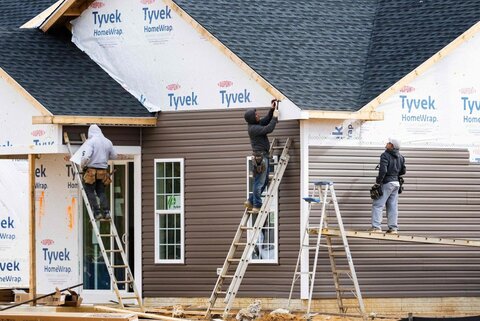

Lawmakers have an opportunity to make progress on rising housing costs in “reconciliation 2.0.” Beyond funding emerging priorities (many of which don’t deserve additional funding), the package will need a credible affordability agenda. Housing should be at the top of the list.
There is no shortage of housing proposals circulating on Capitol Hill. Many are marginal changes. Some are counterproductive. If Congress is serious about lowering housing costs in reconciliation, it should focus on the most powerful supply-side lever in the tax code: cost recovery for residential structures.
Under current law, developers must deduct the cost of building new housing over 27.5 years. That delay erodes the real value of the deduction, raising the after-tax cost of construction and discouraging new housing supply.
This is a central argument in a new article that Veronique de Rugy and I published in the Civitas Outlook. We write:
The penalty imposed by the depreciation system is substantial. As the developer of an apartment building spreads the tax deduction over nearly three decades, inflation and the time value of money greatly diminish the deduction’s value. At a modest two percent inflation rate, a $1 investment that depreciated over 27.5 years is worth only about 56 cents to the business in present value.… Behind inventories and land, residential and nonresidential structures face some of the highest tax rates, more than double those faced by equipment.
The result of this system is that fewer projects pencil out and, thus, fewer homes get built. Which is why, when cost recovery for housing improved in the early 1980s, multifamily construction surged. And when Congress lengthened depreciation schedules a few years later, housing construction collapsed.
Congress has already shown it understands these incentives. The One Big Beautiful Bill Act (OBBBA) made permanent 100 percent expensing for equipment and extended similar treatment, albeit temporarily, to certain manufacturing structures.
Don’t Leave Housing Out
Fixing the tax treatment of residential structures should be central to reconciliation. The cleanest policy is full expensing—allowing immediate full deductions for investment in the housing stock. Short of that, there are several other paths toward reform.
In a recent article, the Tax Foundation’s Alex Muresianu details six alternative ways to increase investors’ access to full investment deductions. The best option is neutral cost recovery, which adjusts deductions for inflation and the time value of money to achieve the same economic result as expensing at a lower budgetary cost. Other options include shorter asset lives, partial expensing, and a per-unit expensing allowance. Each of these options would improve the status quo by lowering the effective tax burden on new construction.
The reconciliation package will also face fiscal constraints. Improving cost recovery for structures reduces near-term revenue and will require offsets. Congress should prioritize spending restraint, but there is also ample room to reform existing housing tax provisions that distort investment.
The Low-Income Housing Tax Credit (LIHTC) is an obvious place to start. It was created in the 1986 reform to offset the damage caused by lengthening depreciation schedules. It failed to solve the underlying disincentive to build. Repealing the LIHTC alongside improved cost recovery would simplify the code and benefit new construction.
Likewise, Congress could build on the 2017 tax cuts by gradually reducing the mortgage interest deduction cap for new loans, phasing it down from its current $750,000 toward the US median house sale price of about $400,000. The mortgage interest deduction is a subsidy that primarily inflates prices, exacerbating affordability.
If lawmakers want a serious, growth-oriented affordability agenda, housing supply must be central, and cost recovery reform should take center stage.